Tuesday, 14 February 2012

Books Speak

Pratah Vandana

Humanity is fortunate to have got a handful of luminaries periodically from time to time, who have made the effort to achieve or understand  the imaginary forces that are a cause for countless phenomena of  life and death, earth and sky, water and fire etc. This effort is reflected in the spiritual inquiries documented like pearls in the knowledge-ocean of Vedas, Upanishads, Ramayana Mahabharata, Jain and Buddhist traditions etc. 160 selected 'mantras’ from the original texts have been compiled and translated in easy and perceptible manner in these books. All these articles were earlier appeared in Mumbai based daily ‘Samkaleen’
Mahabharatman Pitru vandana

A collection of thought provoking  and sometimes inquisitive essays that  gives us an essence of the three major epics of Hindu culture. These essays are a master key to understand these three epics in their original form. All these   articles were earlier published in the leading literary monthly magazine ‘Udd'
Mahabharatman Matru vandana

Among all the female characters in Mahabharata Mata Satyavati is the most senior and the newlywed Uttara, the youngest. Between them there exists female characters spanning four generations. This book provides a true account of different forms of characters like Kunti, Gandhari, Draupadi, Subhadra, Hidimba, Ulupi after careful research of all factual evidences available. This is not merely a character introduction, but is a carefully studied analytical presentation. The series of these articles was appeared in weekly ‘Chitralekha’  Gujarati as well as Marathi. Besides Gujarati this book is published in Hindi & Marathi also.

Garvun Roop Varvi Chhaya
Even after 6 decades of achieving independence, crores of tribal folk are living in the hinterlands of the nation, whose life and demographics trail the urban dwellers by 5 centuries. Today, our country is  home to two nations-One is India which is living a carefree life in the metropolis and the other is Bharat and there have not been enough efforts to provide facilities for even basic needs like drinking water here. After 2 years of firsthand account and careful study of  Adivasi (tribal) community, their culture, lifestyle and their sires, this novel has been compiled. The characters are Akka, Varli, Narsu, Chitru  spread across regions like Nakalang, Bhansar, Matang, Devkop. Other characters in the story are government officials and politicians who are surrounded by seven-star facilities in their air-conditioned office in the capital city, who exploit tribals in the name of development. This novel was serially appeared in the weekly supplement of ‘Mumbai Samachar’

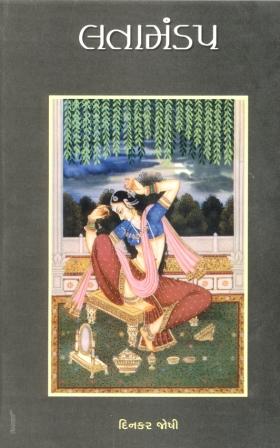
Lata Mandap
Taking the readers to the lives and works of  the core creators of Sanskrit Literature- Kalidasa, Bhavbhuti, Maadh, Dandi, Banabhatt, Bhardibhas etc. this book is filled with the fragrance of literary creation. This book gives captures the quintessential flavour of popular works like ‘Meghdoot’, ‘Kumarsambhav’,‘UttarRamacharit’,   ‘Bharthruharishatak’, ‘Kadambari’ etc. These articles were serialized in the literary supplement ‘Aksharlok’ of Mumbai Samachar’
Sami Sanjana Padchhaya
For 36 years after the battle of Mahabharata, Yadava dynasty   was facing uprooting. In these 36 years, there is no account of a single incident when Shri Krishna stepped out of Dwarka. One feels as if he was experiencing retirement out of dislike for    worldly acts. He could see from a distance the entire Yadava  dynasty battling each other to extinction at the shores of Somnath. Not only this, after the entire Yadava clan is obliterated, when Krishna himself falls prey to a hunter’s arrow and ascends to heavens, his mortal body lay unattended for days, not receiving the last rights.This novel captures this heart wrenching tragedy.    This novel was serially appeared in ‘Janmabhoomi Pravasi’ and ‘Fulchhab’ simultaneously. Besides Gujarati this book is published in Hindi also.

Monday, 30 January 2012

ரத சப்தமி - Ratha Saptami

ரத சப்தமி தினத்தை முன்னிட்டு சேலம் நகரில் உள்ள அனைத்து சௌராஷ்டிரா கட்டளை உறுப்பினர்களுக்கு பாத்தியப்பட்ட கோவிலின் பெருமாள் ஒரே இடத்தில் தரிசனம் தந்தனர்.   ரத சப்தமி நாள் என்பது சூரியன் தனது உதிக்கும் திசையை தென்கிழக்கில் இருந்து வடகிழக்காக மாற்றும் தினம்.
 
Salem Ashok Nagar Venkatesa Perumal kovil
Salem Chinna Kadai Street, Varadaraja Perumal Kovil
Salem Ammapet Main Road, Soundara Raja Perumal Kovil
Krishna Nagar Ramar kOvil
Salem, Veeranam Lakshmi Narasima Swami Temple
Salem Town Sourashtra Krishnan Kovil
இந்த ஆறு பெருமாள் கோவில் உற்சவர்களும் ஒரே காலை முதல் பென்னாடம் வெங்கடராமன் தெருவில் உள்ள சௌராஷ்டிரா கல்யாண மஹாலை வந்தடைந்தனர்.  பக்தர்கள் பங்கேற்று தரிசனம் பெற்று மகிழ்ந்தனர்.

Thursday, 26 January 2012

Republic Day Celebrated by Trichy Sourashtra Valibar Sangam

Jan. 26.  On the occassion of India's Republic Day celebration, Tiruchirapalli, Sourashtra Valibar Sangam (Youngamans Sourashtra Association) at its office building.

President of Sourashtra Valibar Sangam Mr. C.R. Umapathi hoisted National flag.  In connection of this occassion, National flag hoisted at various places of Trichy Palkar PaLo. (16th Ward Area)

Editor of Palkar Sourashtra Samachar Mr. R.Bhaskara Narayanan hoisted Gayathri flag.

At Lakshmana Chowltry, 3drd edition of 'VEDA PALAMAIYANA SOURASHTRAM' Book released.  This book was released by President of Trichy Sourashtra Saba Mr. B.K.N. Rajaram and The First copy of this book obtained by Trichy Corporation Member Mr. T.K. Sankar.

Arrangement of this Function is made by Secretary of Sourashtra Valibar Sangam's Mr. B.J. Harinath  and Asst. President. B.C. Yuvaraj, Treasurer K.V. Prem kumar Asst. Secretary C.R. Amsaram and committee members.

Monday, 9 January 2012

Certificate Distribution Ceremoney

Jan. 8. Sun.


Certificates from CIIL (Central Institute of Indian Languages) to Sourashtri Language students issued in a ceremoney at Salem Sourashtra Kalyana Mahal.  Those who learnt Sourashtri on Nov, Dec of 2010 has received the certificate.

Ceremoney began with Prayer song of Mahesh Kumar and Welcome address by T.R. Bhaskar.  After that, Chief guests gave speech about proudness of Sourashtri language.  Though Sourashtri is minority language, there is interest in learning of that language of native speakers. Mr. K.N. Lakshmanan, B.A., Ex. M.L.A., Mylapore constituency, President of Panduranga Natha Devastanam, Mr. Dr. K.K. Thirumal Rao, Correspondant of Sourashtra Middle School, Mr. Ananthan, Dr. K. Visalakshi, M.L. Jayapal, Mr. V.B. Chandrasekar, D.H.T., (SSM College), Mrs. N. Sakunthala, B.Litt., Ex. M.C., of Salem Corporation, Mr. L.S. Vijaya Rangan, Mr. M.K. Nagarajan, M.Com., Mr. N.R. Chandra Sekar (Salem District Sourashtra Munnetra Sangam) Mr. P.K. Mohan, (Thasildhar, Retd.) are guests address.

In their speech, they urged to youngesters, got chance to learn Sourashtri, because of various efforts taken by our community people to survive their mother-tongue.  And they expected the Government should allot fund to survive and develop Sourashtri language.

Mr. Vinoth kumar, ( Editor-In-Charge, Palkar Sourashtra Samachar) gave vote of thanks.

Saturday, 31 December 2011

Losting Identity of Sourashtra Weavers


Sourashtra community is losting it traditional identification as " Traditional Weaver "  (Veenkaar***) After some years, we are going to see our handloom knowledge in stamps, and photographs as a memorial one.

Old literatures says Rishi Bharadwaja thought the art of weaving to Sourashtra people.

Clothes constitute a basic requirement of human beings, protecting human dignity. Even the poorest of the poor cannot be without at least some form of clothing. It was with the intent of fulfilling this basic human need .

Weaving is a 'karma' which did not accrue any 'dosham' (fault) to the self. (Atma)

Though it employs a massive number of rural people, the handloom sector is considered a sunset industry. While some of the sector's troubles come from the relentless march of mechanisation, modernisation and sophistication, there's more to the troubled weavers' plight.

A 80-year old handloom weaver Nahandaan Rammurthy has no hope of relief from the drudgery. His is a struggle against age, ill health, low income and loneliness. This Sourashtra speaking man from Salem district in Tamil Nadu is burdened with a hernia, frequent stomach ache, failing eyesight and pangs of hunger. He has been working for the past 50 years with one master weaver, in a traditional system of cloth production in India, wherein an investor employs weavers for weaving clothes.
Everyday, Rammurthy has been putting in almost 12 hours of work. He has been earning in the range of a paltry Rs 3000-3500 per month -- major portion of which goes to pay for mounting debts and failing health. Despite lifelong labour, his worldly possessions a rented house, and limited vessels and cloths. Rammurthy's life epitomises the problems of handloom weavers and their livelihoods in India.
Weavers like Rammurthy toil for most of their waking hours to weave the rich tapestry of white silk dhoties that delight consumers across the world. Yet, their earnings per month do not exceed Rs 3,500. This is also the family income, as all family members chip in. Fortunately he did'nt have any Children.   If he had children he had bare the same income for their educating themselves, especially the girl child, who has to help in house chores and livelihood also.
How did this come to be?

As noted earlier, handloom weavers are facing severe livelihood crisis because of adverse government policies, globalisation and changing socio-economic conditions. The national and state governments do have several schemes pertaining to production inputs, market support and development, meant to safeguard the interests of the weaving community. Ineffective implementation of the schemes and the changed context of textile industry -- increasing competition from the powerloom and mill sectors -- has been largely responsible for the crisis in the handlooms.
Lack of information to weavers regarding various policies and schemes is no less a significant cause for the dwindling fortunes of the weaver community. Even government departments and implementing agencies related to handloom suffer from inadequate information and data resulting in a widening gap between policy formulation and implementation.
The formal education system (including research institutes) has not included teaching and imparting skills for this profession into its fold. As a result, any innovation and change has been left to the weaving families. In the recent decades, due to lack of information and fast paced changes, practices in handloom sector became static and apparently redundant.

This results the traditional Sourashtra community weavers to search alternate profession for livelihood.  In Tanjure for last three years more than 40,000 (forty thousand) weavers thrown their handloom job and engaged themself in various jobs like Tea-maker in Coffee-shop, Barber, Two-wheeler mechanic etc.  At Salem Nearly no weaver exist in Shevapet's 1,00,000 population and Salem Town's population only 3000 looms are producing fabrics. 

*** Veenkaar is the term to state weavers of sourashtra community.  Their famous silk weaving products is for royal families.  So they called Royal weavers also.  In ancient time, the Wage-Weavers are called " Mago Vinnaar " and the Superviros called as " Mago pAlkAr ".   Literally   " pAl " means ' Supervise or Rule or Manage or Govern " .   These " palkar " are highly skilled weavers and they teach, supervise the other weaver  called as " Veenkaar " .   Thus the major two division of weavers are the Labours & Supervisors.  ( Veenkaar & Palkar ).  Later by their teaching, the Wage-Weaving Loom is called as " Mago Tan'nathram " OR " Magathe Tan'nathram).   Today this word shrinked as " Mago " .  

Literally " Mago " means ' Ask ' in Sourashtri Language.  One who weave for Wage is called " Mago Vinnaar ".   The Supervisors (pAlkAr) used to call labours as " Magothko Vin'naar ".  (One who weaves for wage OR Coolie).   Later the word " Mago" gradually replacing its exact meaning and became used to mention a LOOM !.

Today in Telugu, Kannada, Sourashtri languages, the loom is called ' Magga, Maggam, Mago " respectively.   These Telugu, Kannada words reflects, the Path which the Sourashtra Migrants travelled towards South India from West India's Saurashtra.

Wednesday, 28 December 2011

South Zone Sourashtra Samuha Peravai Meet


Dec. 27 Tuesday.
A meet to honour achivers in various fields belongs Sourashtra Community held at Palayankottai, IIPE Lakshmi Raman HIgher Secondary School.  All India Sourashtra Madhya Saba and South Zone Sourashtra Samuha Peravai conducted this meet.

Mr. E. Santharam, President AISMS presided over the function.  Mr. S.R. Anantharaman, President South Zone Sourashtra Samuha Peravai, Correspondent of IIPE School explained the achievers in the field of Medical, Wind-Mill Power generators, Local body election winners of Tamil nadu, Journalists, Sourashtri Language development.  Mr. L.S. Vijaya rengan gave welcome speech.

Sunday, 20 November 2011

What are the feature of Nomenclature of Indus Civilization?

There are two names that have been applied to ancient India's first phase of urbanization - Harappan civilization or Indus civilization. The first of these is derived from an academic tradition which uses a type specimen, or site, as the basis for nomenclature in archaeology.
Since the mounds adjacent to the modern village of Harappa were the first locality where the remains of this civilization were first identified, the name Harappan fits such a system perfectly. The second name, Indus civilization is used interchangeably.
Firstly because it refers to precisely the same cultural, chronological and geographic entity and secondly because it started from the river valley of the Indus River and the largest concentration of settlement sites are located along the course of this river sir John Marshall was the first scholar to use this term.
While both these terms can be justified in some ways, neither of them is without shortcomings. For example, the very notion of the Indus civilization in Saurashtra (Gujarata) is out of place in view of the fact that it is reasonably beyond the geographic bounds of the Indus valley, as are Haryana, Indian Punjab and Western Uttar Pradesh, where the remains of Indus civilization were found. The term Harappan civilization, conjures up a notion that the civilization began at a site which best represents the ancient urban system of South Asia.
The Indus civilization belongs to the proto- historic period since it represents a phase in which people had developed a script and written records are available but the script has not been deciphered as yet despite repeated attempts.
Although some scholars are inclined to place Indus civilization in the category of chalcolithic state but majority thinks that chalcolithic groups were primarily rural farming communities with knowledge of copper, the first metal to be used by mankind. Technologically speaking chalcolithic stage applied to the pre-Harappans and many post-Harappans because they mostly used stone and copper objects, although they very occasionally used low-grade bronze.
On the other hand, the Harappans used bronze on a large scale and were urban in character. One might expect that left to its own resources, the internal development in the chalcolithic period would in due course have led to urbanization. So it is agreed that the Indus civilization belonged to Bronze Age, generally associated with city formation.

Source :
http://www.preservearticles.com/2011101915685/what-are-the-feature-of-nomenclature-of-indus-civilization.html